
Flux Capacitor 2026: Applications Open for 1517 Angel Check Program
There are no scientific revolutions without revolutionaries

A few years ago we launched an angel check program we called the Flux Capacitor. The idea was simple: one of the key chokepoints in American science is that our institutions don’t trust younger scientists to do great work. The average age of first-time grant recipients tends to be about 40 to 45. This needs to drop by twenty years.
So we’ve created an off-ramp for insanely exceptional researchers who want to pause or leave their academic career by giving them the resources they need to commercialize their work or to jumpstart a moonshot science experiment outside of academia.
Selected teams each received a $100k investment from us (with the potential for more as progress is made) as well as a strong peer community of like-minded builders and mentorship from our team.
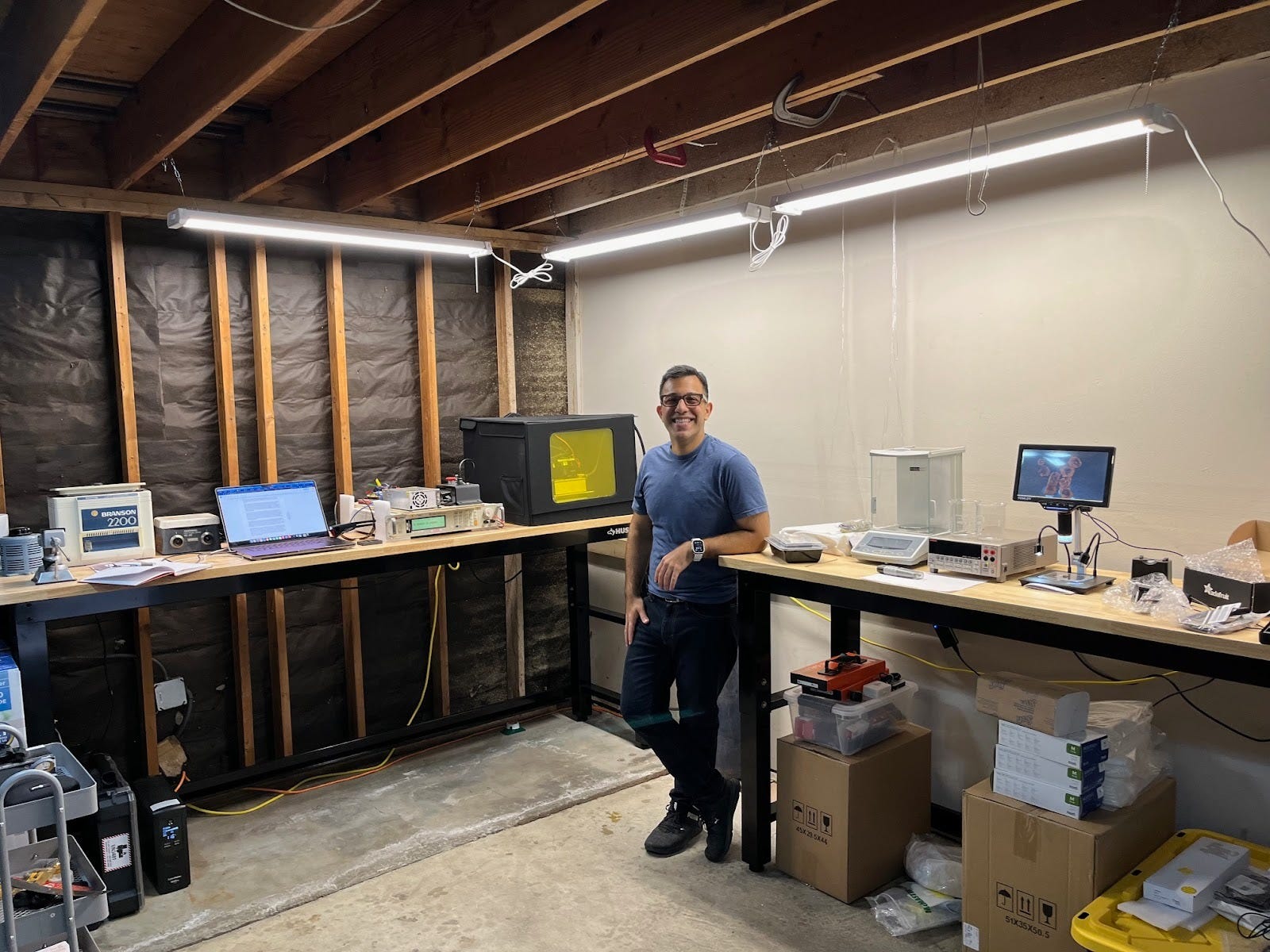
Since launching Flux we’ve received hundreds of incredible applications — from people like Amir Mashal working on a new type of conductive material to replace copper, and Olivia Krivitsky inventing a new super-bandage that heals wounds faster, to people like David Hooper building new platforms for identifying and studying UAP. We’ve noticed a pattern among the teams that seem to thrive: they have an unquenchable thirst for exploration and are experimentalists at heart. Many are also already working outside of academia or taking a break from their academic career because they just couldn’t wait to explore their frontier of interest. They had to start building now.
It’s no secret that our current systems for advancing science and discovery are broken. Large funders act as gatekeepers that choose who and what gets funded. In many ways, academia has grown more obsessed with credentials and prestige than science itself. One could argue that over the last one hundred years the course of science has drifted more towards safe harbor and away from the horizon. Scientists today must even be careful which questions they ask out loud lest they ruffle the feathers of the mainstream science machine. The endless ridicule and criticism that was piled on Avi Loeb over the last year for openly asking whether 3I/Atlas might be something artificial created by another intelligent lifeform in the cosmos is a testament to how broken mainstream science is today. Sure, 3I/Atlas is likely no more than a fascinating interstellar comet — but proposing, exploring, and falsifying other possibilities is exactly what science is for. We should be asking more questions, not arguing over what questions should be allowed to be asked.
Humankind has never had a more urgent need for explorers. As we race into an increasingly chaotic future, we need those among us who are willing to boldly go where no man has gone before — and they’re willing to risk it all to help us make sense of what lies ahead. Over the last two years of Flux we’ve found many explorers within academia who were looking for a way to continue advancing their work outside of the traditional paths. We’ve also found many who opted to never take the academic route in the first place and instead have been experimenting in their basements and garages as time and resources permit. So whether you’re looking to leave academia or take your work beyond your garage, we’d love to see you apply.
Applications are now open at this link. Submit your application by April 18, 2026 at 11:59PM Pacific. Teams that make it to the finalist round will be invited to San Francisco for in-person interviews with us the first week of June in conjunction with our annual 1517 Summit. Teams we select will receive a $100k investment from us to explore the commercialization of the work or further moonshot science. Additionally, you’ll also have access to a community of peers in your cohort (as well as our broader portfolio) and continued membership from the 1517 team as you advance your work.
Ready to start? Apply now.
FAQs:
When will I know if my application is selected to move to the finalist round?
Teams selected to move the finalist round will be notified by the first week of May.
Is this a grant?
No it is not. It’s an investment.
What if the company is not incorporated?
If you are selected, you will be given advice on how to set up your company as a Delaware C-corp. You should be prepared to start this process immediately.
Am I expected to work on this full time?
Yes.
What kinds of questions are in the application?
We want to know if you have a head and heart. We’ll ask you to explain what you want to do and why you want to do it.
Do I need to move to San Francisco?
No, but we will discuss which ecosystem is the best one for you to build your research and startup and help you to get there.